
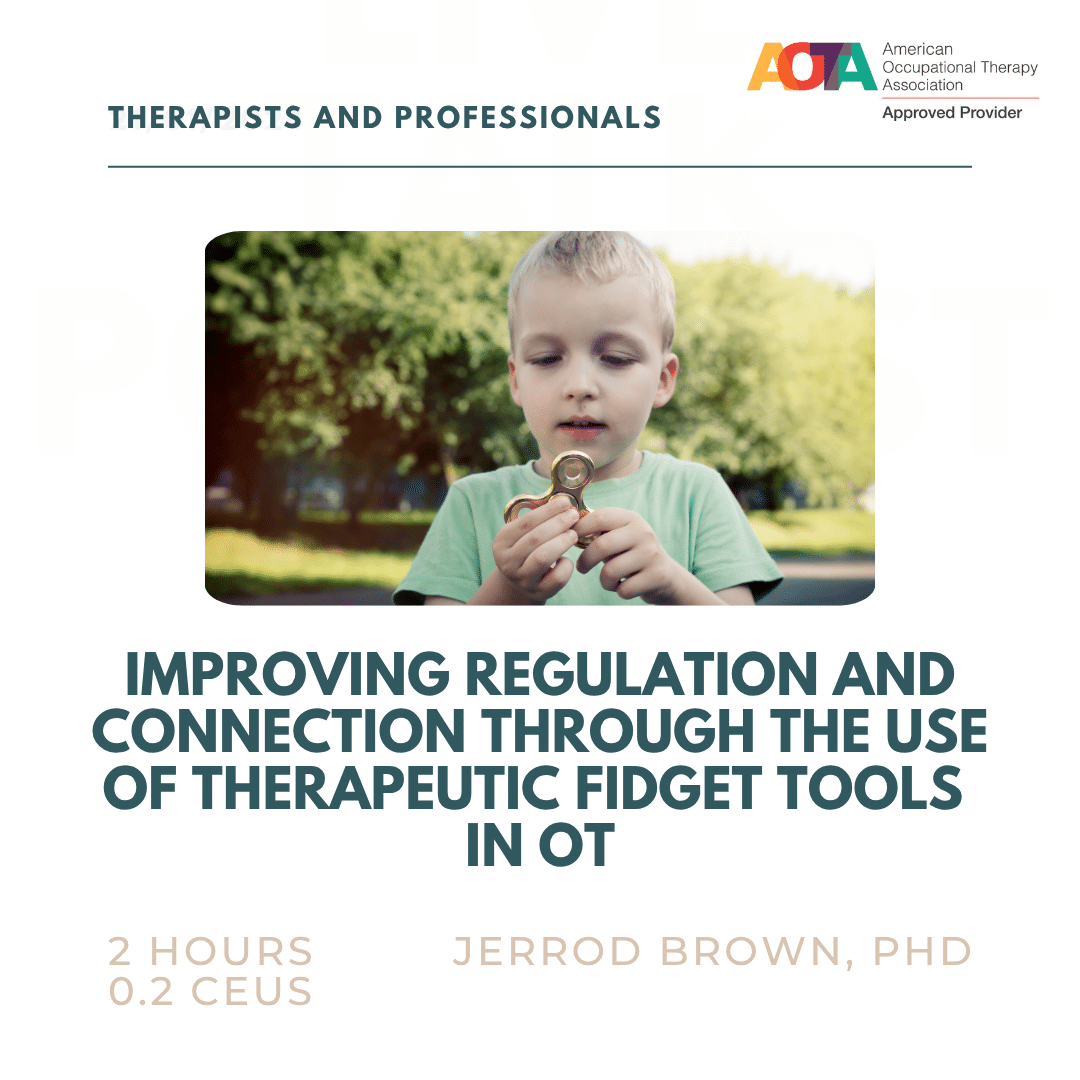
Therapeutic fidget tools are small devices that can be used in trauma-informed treatment. Examples include squishy stress balls, manipulative toys (e.g., tangles), jewelry (e.g., movable bracelets or chewable necklaces), and other textured items that can be squeezed, rubbed, or moved. Benefits of these devices include improvements in mindful engagement, grounding, attention, and self-regulation, along with enhanced management stress, anxiety, self-harm (e.g., hair pulling), and trauma symptoms. When utilized as part of a comprehensive treatment plan, therapeutic fidget tools can help empower clients by fostering a greater sense of autonomy and self-awareness. The use of therapeutic fidget tools is particularly beneficial in clients with traumatic experiences, attentional issues, or neurodivergence.
Designed for professionals from diverse backgrounds (e.g., occupational therapy, mental health, education, and other helping professions), this 2-hour webinar provides an overview of how therapeutic fidget tools can be integrated into trauma-informed treatment along with their associated benefits (e.g., improved treatment engagement, emotion regulation, and sensory integration). The backbone of this training focuses on practical implementation considerations including individualizing treatment to the client’s strengths and needs (e.g., cognitive, affective, social, and developmental), selecting appropriate fidget tool for the client’s needs (e.g., considering the possibility of choking hazards), building a safe environment, teaching self-regulation strategies, and overcoming common challenges. The instructor’s clinical experience, insightful case studies, and up-to-date research will be integrated throughout the training to reinforce key learning objectives.
 |
Sensational Brain LLC is an AOTA Approved Provider of professional development. PD activity ID# 17388. This distance-learning, independent format is offered at 0.2 CEUs, Introductory Level, OT Service Delivery.The assignment of AOTA CEUs does not imply endorsement of specific course content, products, or clinical procedures by AOTA or indicate AOTA approval of a certification or other professional recognition. |

Jerrod Brown, PhD, MA, MS, MS, MS, MS, MS, is a professor, trainer, researcher, and consultant with multiple years of experience teaching collegiate courses. Jerrod is also the founder and CEO of the American Institute for the Advancement of Forensic Studies (AIAFS) and founder and co-editor-in-chief of Forensic Scholars Today. Jerrod has also provided consultation services to a number of caregivers, professionals, and organizations pertaining to topics related to autism spectrum disorder (ASD), fetal alcohol spectrum disorder (FASD), confabulation, suggestibility, trauma and other life adversities, alexithymia, executive dysfunction, criminal recidivism, traumatic brain injury (TBI), and youth firesetting. Jerrod has completed six separate master’s degree programs and holds graduate certificates in Applied Pediatric Nutrition, Medical Biochemistry, Exercise Prescription, Neuroscience and the Law, Neuropsychology, Autism Spectrum Disorder (ASD), Dyslexia, Other Health Disabilities (OHD), and Traumatic-Brain Injuries (TBI). In 2021, Jerrod completed a post-doctoral certificate in Leadership and Organizational Strategy from Walden University and a Professional Certificate in Forensic Psychology from San Diego State University Global Campus. In 2023, Jerrod completed a certificate in diabetes care and education from Central Arizona College. Jerrod has also conducted over 300 workshops, webinars, and on-demand trainings for various organizations and professional and student audiences. Jerrod has published several articles and book chapters, and recently, co-edited the book Forensic Mental Health: A Source Guide for Professionals (Brown & Weinkauf, 2018) with Erv Weinkauf. Jerrod has also been quoted in various magazines, newspapers, and other professional outlets. Jerrod is also regularly featured on several national and international podcast programs.


