
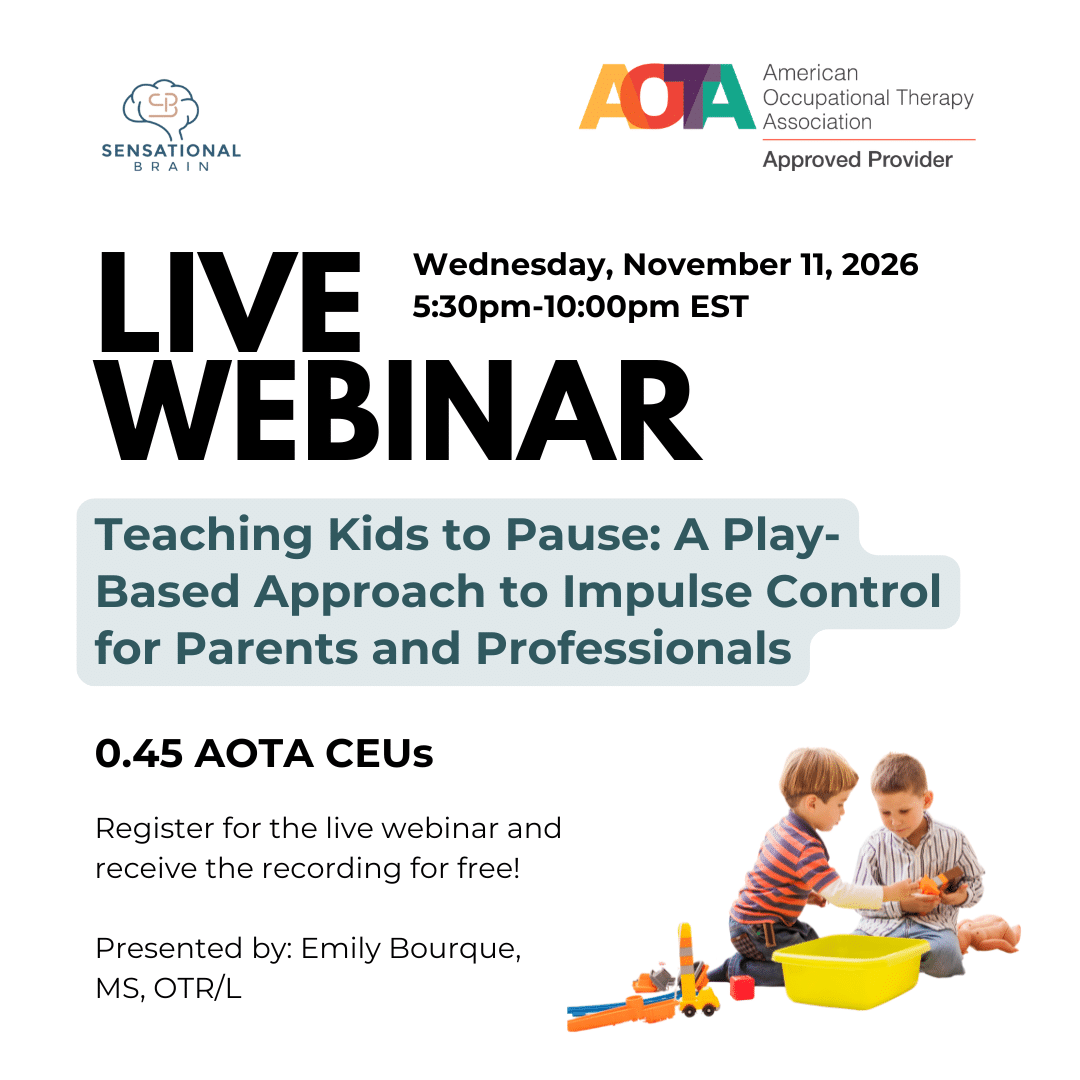
Impulse control is a foundational skill that develops over time, and many children need intentional support and practice to strengthen it. This 4.5-hour course explores what impulse control is, why children may struggle with it, and how to respond both proactively and reactively to build meaningful, lasting skills. Participants will learn practical, engaging strategies that can be incorporated into everyday interactions with children ages 3 and up. This course includes
Most importantly, this course provides a framework for bringing these approaches together so that adults can intentionally support children in developing stronger impulse control skills, not just in the moment, but over time.
Designed for children ages 3 and up, this course offers practical tools and a clear framework for helping children move from impulsive reactions toward greater control, awareness, and intentional decision-making.
 |
Sensational Brain LLC is an AOTA Approved Provider of professional development. PD activity ID# 00000. This distance-learning, interactive format is offered at 0.45 CEUs, Introductory Level, OT Service Delivery. The assignment of AOTA CEUs does not imply endorsement of specific course content, products, or clinical procedures by AOTA or indicate AOTA approval of a certification or other professional recognition.
.
|
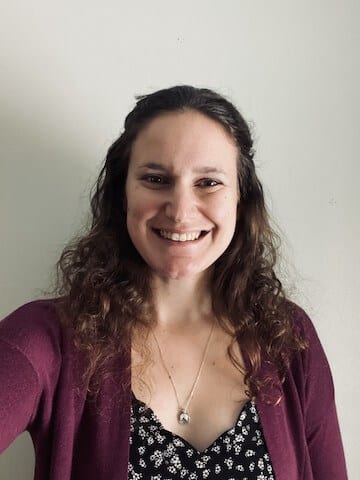
Emily Bourque, MS, OTR/L, graduated from the University of New Hampshire with her master’s degree in 2016. She grew up with a younger sister who has Down syndrome. Attending IEP meetings and advocating for her sister molded her occupational therapist’s mindset long before graduation.
Emily participated in the Leadership in Neurodevelopmental Disabilities program in her final year of college, where she worked on projects with the Parent Information Center of New Hampshire, New Hampshire Family Voices, and the Institute of Disability at the University of New Hampshire. She has volunteered for many special needs organizations including Special Olympics, the local recreation department, and various therapeutic riding centers.
Emily has worked in a variety of settings including skilled nursing, inpatient rehabilitation, schools, early intervention, and outpatient pediatrics. She has created resources and interactive activities for her clients and collaborated with local optometrists to implement a pediatric vision program. In addition, she is an adjunct faculty member at the University of New Hampshire OT department, teaching for three years nonconsecutively. She coordinates a life skills group for young adults with disabilities.
Emily enjoys laughing with her patients and most of all seeing their continued progress. She strongly believes that parent education and collaboration are paramount to successful OT services. She believes in inclusion for individuals with disabilities.


